
Q1 2024
MarketSquare
Designing trust for high-value peer-to-peer commerce
MarketSquare
Designing trust for high-value peer-to-peer commerce
Q1 2024
Overview
The Situation
Peer-to-peer marketplaces unlock access and liquidity for high-value goods, but they also introduce systemic risk. Unlike traditional e-commerce, where trust is centralized in the platform, P2P transactions distribute trust across individual participants—creating uncertainty around seller credibility, product authenticity, and payment security.
MarketSquare set out to solve a critical behavioral problem: users were reaching high-intent moments—onboarding completion, listing activation, and payment—but hesitating or abandoning due to lack of confidence. Early signals showed that trust was not failing at a single step; it was eroding cumulatively across the experience. This resulted in stalled transactions, reduced marketplace liquidity, and increased fraud-related concerns.
The opportunity was not simply to reduce friction, but to redefine how trust is communicated throughout the product lifecycle.
My Role
I led the end-to-end UX effort over an eight-week engagement, owning the experience from discovery through delivery. My scope spanned research synthesis, interaction design, system definition, prototyping, and usability validation across both mobile and web platforms.
I worked cross-functionally with product managers and engineers to translate abstract marketplace risks into concrete, scalable design decisions. This included aligning on experience principles, defining trust signals, and ensuring that design solutions could be implemented within technical and timeline constraints.
Results
A/B testing against the legacy experience demonstrated measurable improvements across both behavioral and perception metrics:
Onboarding completion increased by 26%
Transaction drop-off decreased by 17%
Task success rates improved to 32%
User trust perception scores increased by 100%
Listing activation increased by 79%
Post-launch analysis also showed an 18% reduction in fraud-related support requests, indicating that improvements extended beyond usability into real-world risk mitigation.
Discovery
Understanding the Problem
Through competitive analysis, journey mapping, and usability evaluation, a clear behavioral pattern emerged: users were willing to tolerate additional steps when those steps increased their confidence, but abandoned flows quickly when uncertainty appeared without explanation.
This insight fundamentally reframed the problem. Speed and efficiency—typically primary optimization goals—were not the limiting factors. Instead, the absence of clarity and reassurance created friction that outweighed any gains from streamlined interactions.
Trust, therefore, was not a feature to be added. It was a system-level experience requirement that needed to be embedded across the entire user journey.
Define
The Challenge
Designing for a two-sided marketplace introduces inherent tension. Reducing friction for sellers can increase risk for buyers, while introducing safeguards for buyers can reduce seller participation and slow marketplace activity.
The core challenge became operationalizing trust as a measurable product problem. Existing verification signals were inconsistent, listing expectations were unclear, and payment flows introduced anxiety at the most critical decision points.
The team aligned around a key principle: trust must be communicated continuously, not episodically. Rather than relying on isolated safety features, the product needed to provide persistent signals of credibility, transparency, and control throughout the entire transaction lifecycle.
Understanding and Analyzing
Before moving into design, I conducted a comprehensive review of both historical and current research to ground decisions in evidence. This included synthesizing internal documentation, customer experience insights, and prior usability findings.
This analysis reinforced that trust breakdowns were not isolated incidents but systemic gaps across onboarding, listing creation, discovery, and payment. Addressing these gaps required a cohesive approach rather than incremental fixes.
Market Research
External research further validated the scale of the problem. In 2020, users lost approximately $3.3 billion to fraud across peer-to-peer marketplaces. Projections indicate that this figure could grow to $33 billion by 2025, highlighting both the urgency and the business impact of trust failures.
Competitive Landscape
Analysis of leading platforms—including eBay, Etsy, Facebook Marketplace, and Amazon—revealed a reliance on third-party payment systems and relatively limited use of emerging technologies such as AI to proactively enhance trust and usability.
While these platforms provide baseline protections, they often fail to deliver consistent, real-time reassurance throughout the user journey.
Users
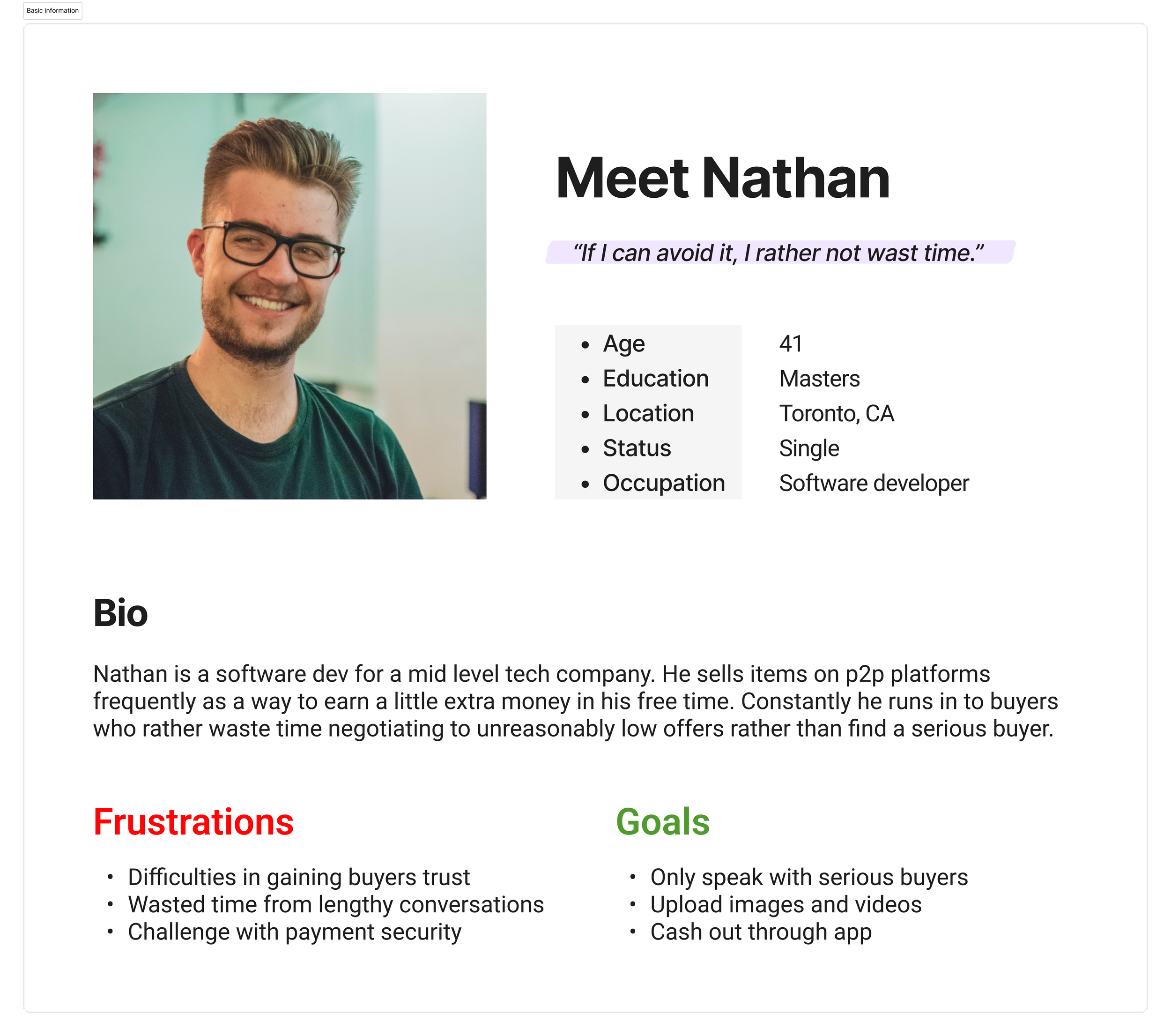
To better understand user pain points, I partnered with customer experience and documentation teams to gather qualitative insights. These findings informed the creation of journey maps, empathy maps, and personas representing both buyers and sellers.
This dual-sided perspective was critical in identifying conflicting needs and ensuring that solutions supported overall marketplace health rather than optimizing for a single user group.
Design Audit
A comprehensive audit of the existing product identified key usability and structural issues that contributed to trust breakdown:
Sellers could not edit listings after creation, limiting flexibility and accuracy
Filtering capabilities were insufficient, reducing discovery confidence
UI components such as buttons and input fields lacked consistency
Information architecture was fragmented and difficult to navigate
Core user flows contained unnecessary complexity and friction
These findings provided a clear baseline for improvement and informed prioritization for the V1 redesign.
To expand solution space, I facilitated a collaborative brainstorming session that encouraged divergent thinking without feasibility constraints, enabling the team to explore high-impact ideas before converging on practical implementations.
Ideate
Designing Trust as a System
The ideation phase focused on embedding trust across the full marketplace experience rather than treating it as an isolated layer. Exploration centered on:
Progressive onboarding to gradually build confidence
Early and persistent visibility of verification signals
Transparent pricing and fee communication
Reassurance patterns during high-risk interactions
Strategic integration of AI to reduce ambiguity
These explorations led to a set of guiding principles: prioritize visibility, maintain transparency, and introduce intentional friction where it increases user confidence.
Key Product Questions
Two core questions guided solution development:
How might we reduce scams while increasing meaningful engagement between buyers and sellers?
How might AI be integrated in a way that enhances clarity without introducing new uncertainty?
Concept Exploration
Several concepts were explored to address these questions:
AI-assisted listing creation, including automated descriptions and category tagging
A “pay-to-talk” feature to enable more intentional buyer-seller communication
A wallet system to centralize and secure transactions
MVP Definition
To ensure focus and feasibility within timeline constraints, the MVP prioritized foundational marketplace functionality:
Listing creation and management
Direct messaging between users
User Flow
To operationalize these concepts, I developed a comprehensive end-to-end user flow that mapped user intent, system responses, and potential edge cases.
This exercise surfaced complexity early, enabling cross-functional alignment on interaction logic before investing in high-fidelity design. It also ensured that trust signals were consistently integrated across all stages of the experience.
Design
System Design and Prototyping
Using research insights and defined principles, I developed a scalable design system alongside wireframes and high-fidelity prototypes in both light and dark modes.
The system emphasized consistency, clarity, and accessibility while supporting the nuanced needs of both buyers and sellers.
Accessibility and Brand Identity
Design decisions were guided by WCAG accessibility standards and a clearly defined brand identity. The visual language was intentionally aligned with themes of:
Sophistication and high value
Luxury and trustworthiness
Clean, minimal elegance
These attributes reinforced the platform’s positioning as a safe environment for high-value transactions.
Key Experience Touchpoints
The redesigned experience addressed all major interaction points, including:
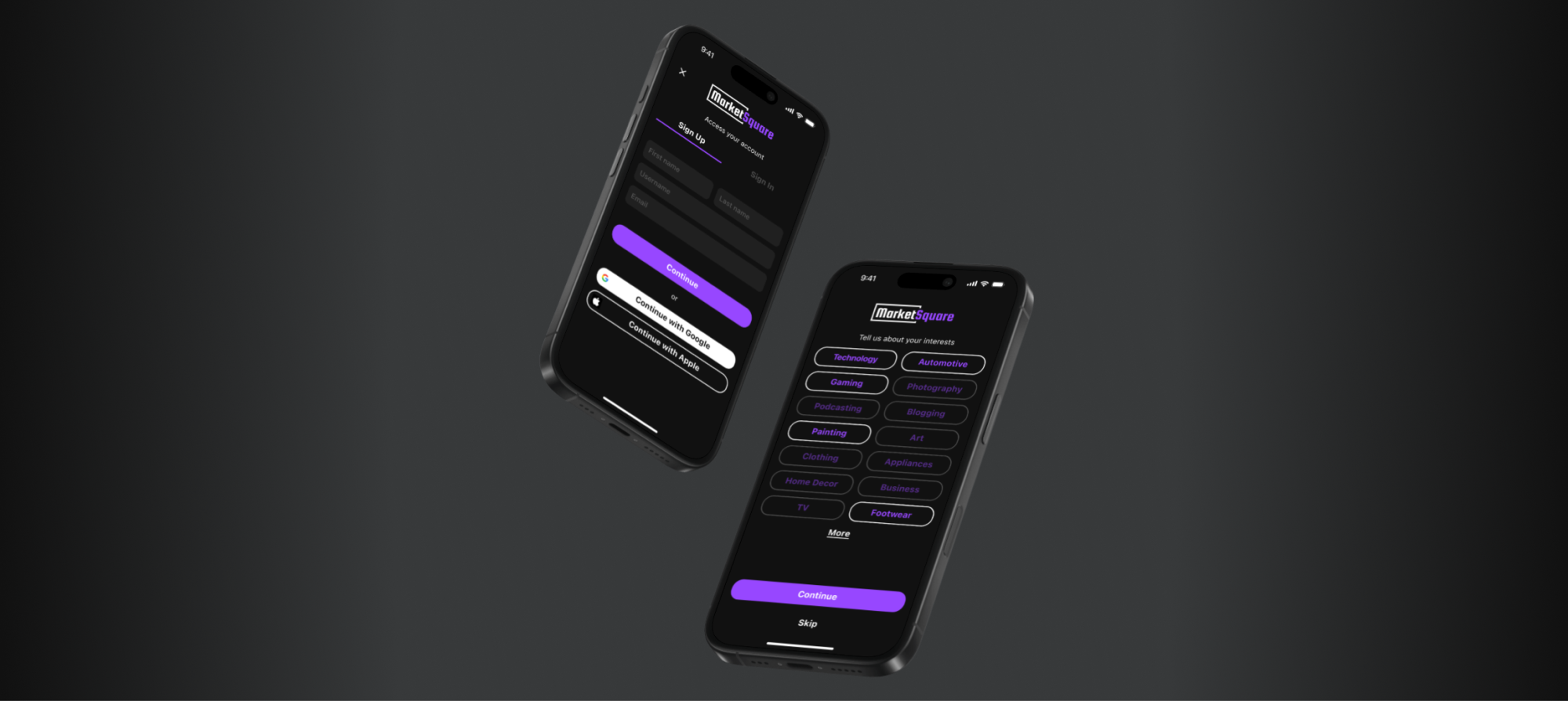
Sign up and authentication
Onboarding flows
Search and discovery
Home experience
Product detail views for buyers
Listing creation for sellers
Wallet and transaction flows
Each touchpoint was designed to reinforce trust through clarity, feedback, and consistency.
Tradeoffs
Given time and engineering constraints, strategic tradeoffs were necessary. The team prioritized foundational trust and marketplace stability over feature expansion.
Advanced capabilities such as personalization and seller analytics were intentionally deferred to focus on strengthening core transaction confidence.
In several cases, friction was deliberately introduced—particularly in high-risk interactions—to prioritize certainty over speed. This decision reflected the core insight that users value reassurance more than efficiency in high-value transactions.
Results
What Changed
The redesigned experience systematically addressed trust gaps across the user journey, resulting in measurable improvements in both behavior and perception.
Outcomes
A/B testing with 19 existing users revealed significant gains:
Onboarding completion increased by 26%
Transaction drop-off decreased by 17%
Task success rates improved to 32%
User trust perception scores increased by 100%
Listing activation increased by 79%
Follow-up analysis showed an 18% reduction in fraud-related support requests, indicating real-world impact beyond usability metrics.
Business Impact
Improved trust translated directly into increased user engagement and retention. As confidence in the platform grew, users were more willing to complete transactions and participate ակտիվly in the marketplace.
Beyond immediate metrics, the project established a scalable trust framework that can support future growth and feature expansion.
Takeaways
Reflection
This project reinforced that in two-sided marketplaces, trust is not a supporting feature—it is the core product experience. Designing for high-value transactions requires balancing usability with confidence, ensuring that users feel informed, protected, and in control at every step.
Empathy played a central role in this process. While business metrics and growth are critical, long-term success depends on building systems that genuinely address user concerns and reduce perceived risk.
What I Learned
Grounding decisions in data—both quantitative and qualitative—was essential in navigating competing priorities. Synthesizing past research alongside new insights enabled stronger alignment with stakeholders while maintaining a user-centered perspective.
Balancing business goals with user needs was challenging at times, but ultimately led to more resilient and effective design outcomes.
What I Would Do Next
Future iterations should continue strengthening security and flexibility within the platform. Key opportunities include:
Introducing multi-factor authentication for wallet interactions
Expanding supported payment methods
Iterating on communication and verification systems
Continued investment in these areas would further enhance trust and support long-term marketplace scalability.
Discovery
Understanding the Problem
Through competitive analysis, journey mapping, and usability evaluation, a consistent behavioral pattern emerged: users were willing to accept additional steps when those steps increased confidence, but quickly abandoned flows when uncertainty appeared without explanation.
This reframed the problem. Speed was not the primary goal — reassurance was. Users needed clarity throughout the transaction lifecycle to feel safe completing high-value exchanges.
Define
The Challenge
Unlike traditional e-commerce platforms, P2P marketplaces must balance the needs of buyers and sellers while maintaining marketplace liquidity. Improvements that reduce friction for sellers can introduce risk for buyers, and vice versa.
The core challenge became defining trust as a measurable product problem. Verification signals were inconsistent, listing expectations unclear, and payment flows introduced anxiety at decisive moments. The team aligned around designing a system that communicated confidence continuously rather than relying on isolated safety features.
Understanding and Analyzing
Before diving into design I wanted to gather a firm understanding about our product. This required a look into past and current research.
The core challenge became defining trust as a measurable product problem. Verification signals were inconsistent, listing expectations unclear, and payment flows introduced anxiety at decisive moments. The team aligned around designing a system that communicated confidence continuously rather than relying on isolated safety features.


Market Research
Every year people lose about $3.3 billion using peer to peer marketplace platforms (2020). By 2025 that amount will rise by 11x to $33 billion.

Competitors
The top most used P2P marketplace apps commonly used today (depending on niche) are Ebay, Esty, FB marketplace and Amazon. Almost all of them use 3rd party payment transactions and have not yet adopted AI into their designs.
Users
To understand known pain points I reached out to the customer experience and docs team to gather information on users. I used that information to form user a journey map, empathy maps, and personas from both a buyer and seller point of view.



Design Audit
Before moving into solutions, I conducted a deeper audit of the existing product to clarify what should remain and what needed refinement in the V1 adaptation. This review revealed several opportunities:
Sellers were unable to edit list items after creation,
Filtering options needed to be expanded to better support search behavior.
Button and input field designs lacked consistency.
The information architecture required restructuring
The main user flow could be condensed to reduce friction.
With these insights, research findings, and personas in mind — I facilitated a collaborative brainstorming session, encouraging the team to generate a wide range of ideas without considering feasibility in order to unlock bold, high-impact solutions.
Ideate
Designing Trust As a System
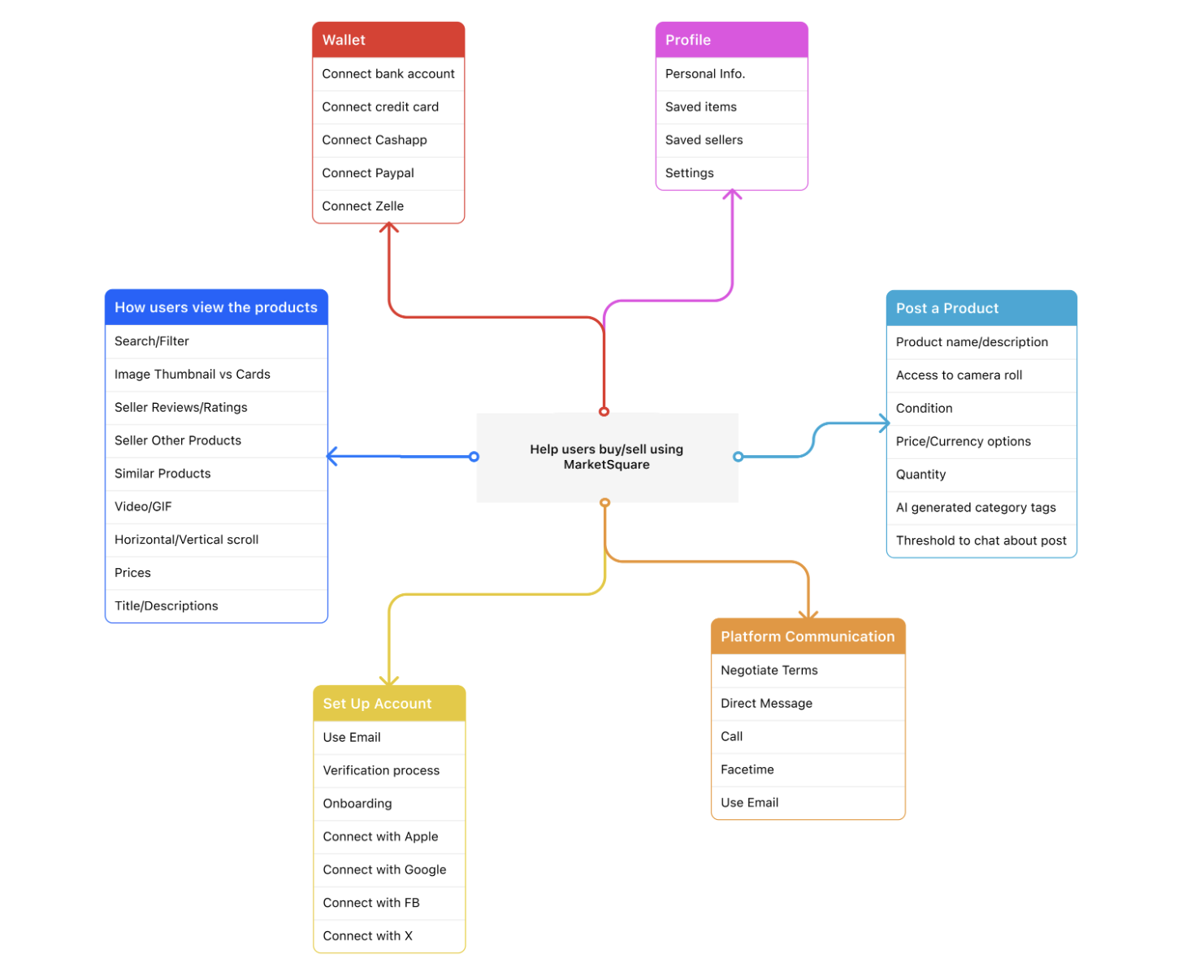
Design exploration focused on how trust could be embedded across the entire marketplace journey rather than added as a standalone feature. Concepts explored progressive onboarding, earlier visibility of verification signals, transparent pricing communication, reassurance patterns during transactions, and AI implementation.
These explorations helped establish guiding principles centered on visibility, transparency, and intentional friction where confidence mattered most.
How might we mitigate scams and increase engagement between buyers and sellers?
How might we successfully include AI in the product’s design?

Use AI to generate description/category tags
Introduce and expand on pay to talk feature
Wallet
MVP Features:

Listing
Direct messaging
User Flow
To understand how the product would function I recreated an end-to-end user flow to operationalize research insights into a scalable product structure. By mapping user intentions, system responses, and edge cases, the flow exposed complexity and trust breakdowns early, allowing cross-functional partners to align on experience logic before investing in UI execution.

Design
Designing Trust as a System (Continued)
Based on the data we accumulated I built out a design system, wireframes and 2 prototypes (light and dark modes) to showcase the new direction of both seller and buyer user flows.

WCAG Accessibilty & Brand Identity
Question for the stakeholder: What does the brand represent and what does it colors scheme say about it?
High value/Sophisticated
Luxury/Royalty
Clean/Elegance

Bringing The Design to Life
Sign Up

Sign In

Onboarding

Search
Home


Product View (Buyer)

Listing an Item (Seller)

Wallet

Tradeoffs
To ensure the UI maintained a visual identity that aligned with current design standards, we introduced targeted tradeoffs that balanced aesthetics with functionality. The idea was to maintain a modern feel and user flow that carefully evaluated against usability and product goals.
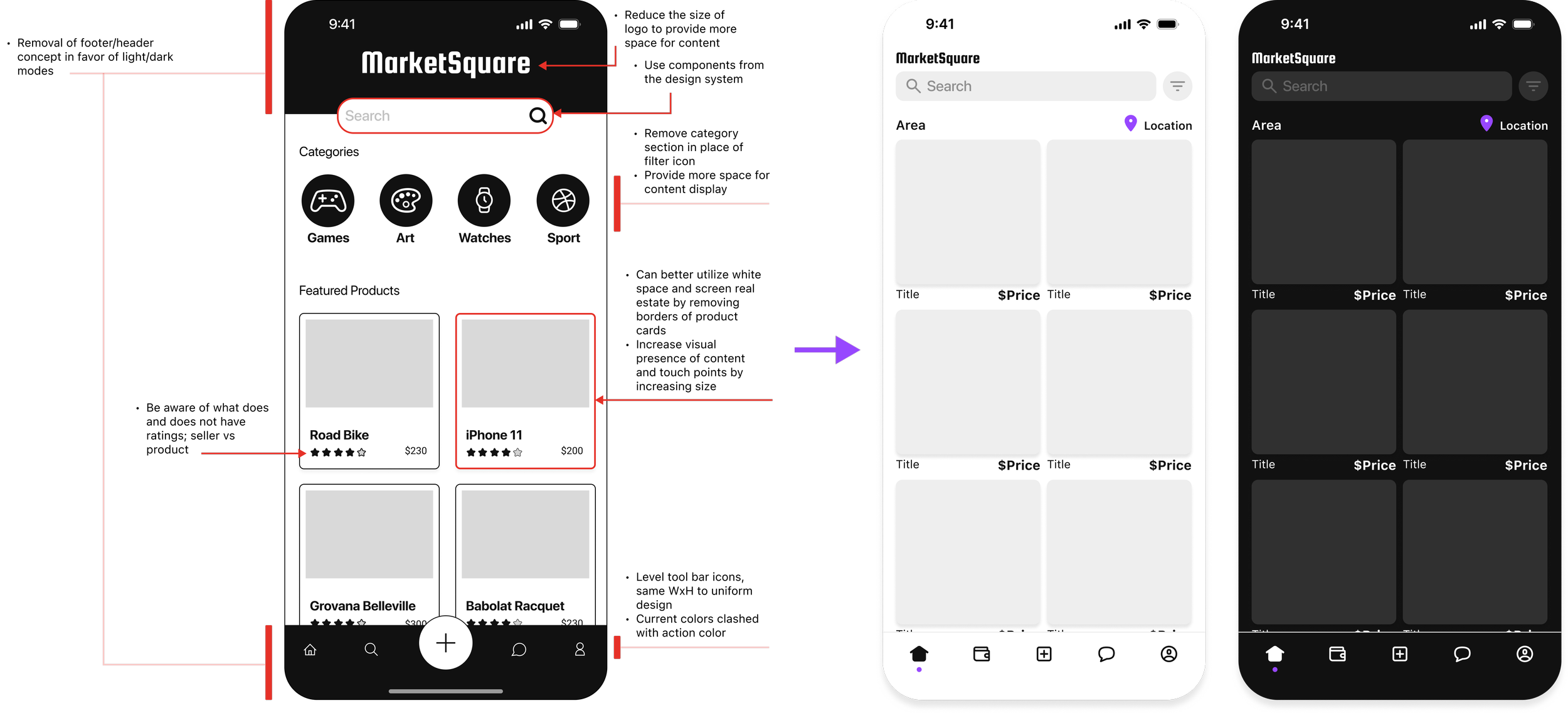
Additionally, working within a compressed timeline and limited engineering bandwidth required prioritizing foundational marketplace stability over feature expansion. Advanced personalization and seller analytics were intentionally deferred in favor of strengthening transaction confidence.
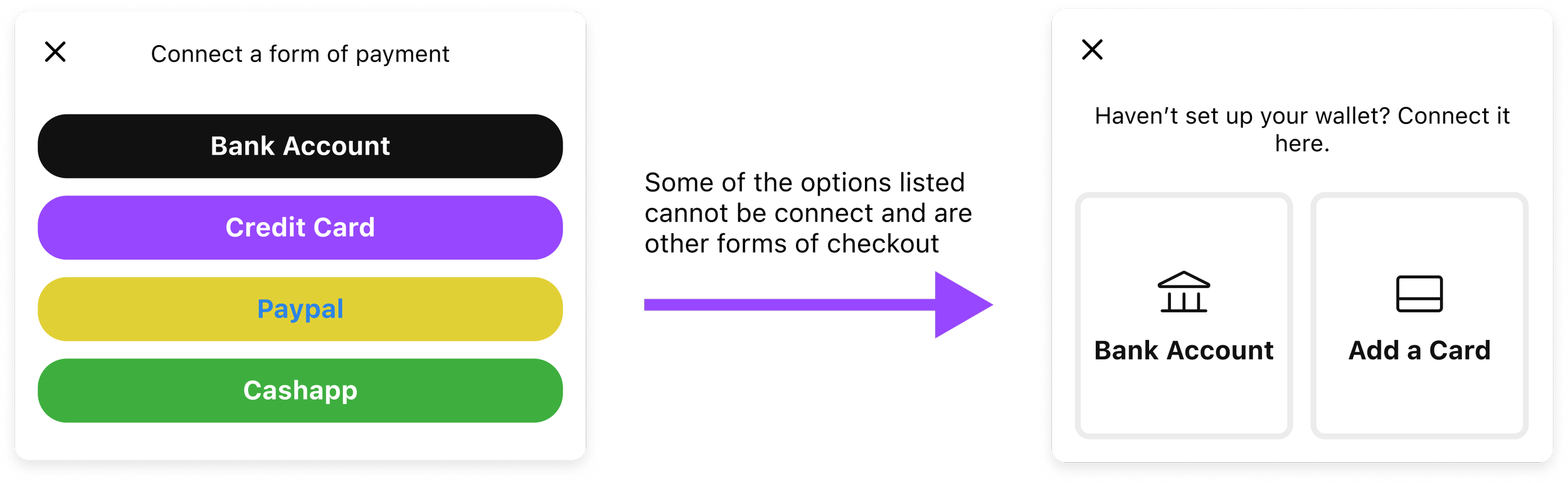
In several cases, deliberate friction was introduced instead of removed, prioritizing certainty over speed during high-risk interactions.
Results
What Changed and What Improved?
Throughout the course of this project the initial design and user flow were modified to improve user trust throughout the experience.
Outcomes (A/B Testing)
When testing the previous design against the redesign with 19 of the previous users, key analytics were discovered. Usability validation showed onboarding completion improving by 26%, while transaction drop-off decreased by 17%. Task success rates increased to 32%, and user trust perception scores improved by 100%. Listing activation increased by 79%.
As time progressed, I checked back with the analytics team and learned fraud-related support requests decreased by 18% after implementation.
Beyond individual metrics, the work established a scalable trust framework capable of supporting future marketplace growth.
Why Does This Matter to The Business?
With increased trust the amount of users interactions skyrocketed and also increased customer retention.
Takeways
Reflection
Designing with empathy in mind. Or to be more direct, focus on the people just as much as the numbers. Pushing product and being profitable is important, but making sure your users feel heard, and improving user trust is arguable just as impactful. MarketSquare reinforced that in two-sided marketplaces, trust is the primary product experience. Designing for high-value transactions requires balancing usability with confidence while aligning user behavior with marketplace health.
What I Learned
Trust the data. Combing through the prior research and doing my own help me gather a better understanding of the direction stakeholders wanted to take this project. Meeting those needs while also keeping the user first sometimes proved challenging, but was ultimately worth it in the end.
What I Would Do Next?
Although I’m no longer apart of the team, I’d recommend continuing to iterate on the flows. Some suggestion that come to mind would be the addition of MFA password protection for the wallet flow and adding new forms of payment.